


Naegohyang Women’s FC made history on Saturday after defeating Tokyo Verdy Beleza 1-0 to win the AFC Women’s Champions League title in South Korea.
The victory marked a remarkable ending to the North Korean club’s rare visit to the South the first by a North Korean sports team in eight years. Played in the city of Suwon, the final saw captain Kim Kyong Yong score the decisive goal just before halftime to secure the continental crown.
Naegohyang, whose name translates to “My Hometown,” lifted the trophy after a disciplined and resilient performance against the Japanese side. Coach Ri Yu Il was seen in tears after the final whistle as players celebrated an emotional victory.
The North Korean champions had earlier stunned South Korea’s Suwon FC Women 2-1 in the semifinal a rare North-South football clash that drew major attention across the Korean peninsula.
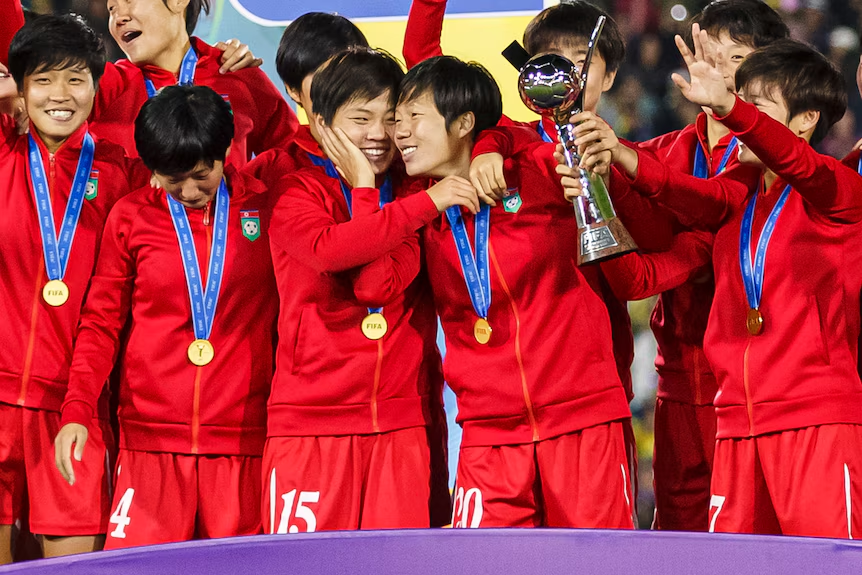
More than 7,000 tickets for the semifinal sold out within hours, highlighting the intense interest surrounding Naegohyang’s visit. Although North Korean supporters were absent due to travel restrictions between the two countries, South Korean fans filled sections of the stadium, beating traditional Korean drums and cheering for the visiting side.
The final itself was fiercely contested, with Tokyo Verdy controlling much of the first half before Naegohyang struck on a rapid counterattack. Jong Kum raced down the left wing and delivered a perfect pass for Kim Kyong Yong to finish moments before the break.
Tokyo pushed hard for an equalizer in the second half, but the North Korean side remained organized defensively and held firm to secure the championship.
The triumph also earns Naegohyang a place in next year’s FIFA Women’s Champions Cup, where they will compete against top clubs from around the world.
Women’s football remains one of North Korea’s strongest international sports, with the country’s national women’s team currently ranked 11th in the FIFA world rankings significantly higher than the men’s side, which sits 118th globally.
For many spectators in South Korea, the tournament carried meaning beyond football.

“We have long been the closest neighbours, yet also the most hostile towards each other,” said Peace Network director Cheong Wook-sik before the match. “I hope these football events can help change that.” The emotional scenes in Suwon once again showed the unifying power of sport, even between two nations technically still at war.


